Singapore Gambling Tax Revenue Climbs to Record Levels in FY2025/26
Geschrieben von Cameron Keller · 8.9.2026

Singapore Gambling Tax Revenue Climbs to Record Levels in FY2025/26
Data from official reports shows Singapore’s combined gambling duties and casino tax revenue reached SG$3.6 billion in FY2025/26, marking an 11.9% increase from the previous year and translating to roughly $2.84 billion at current exchange rates, while overall tax revenue grew by 9.4% during the same period.
Those who track fiscal trends note that this category outpaced every other major tax stream, establishing itself as the fastest-growing segment in the city-state’s revenue mix for the fiscal year that concluded in early 2026.
Breakdown of the Revenue Figures
The SG$3.6 billion total aggregates casino tax receipts with duties collected from other forms of gambling, yet authorities have not released a separate line item isolating casino contributions alone, which means observers must consider the combined pool when evaluating sector performance.
Figures released in September 2026 confirm the 11.9% year-on-year rise, a pace that exceeded the broader 9.4% expansion recorded across all tax categories tracked by the Inland Revenue Authority of Singapore.
Context Within National Tax Collection
Annual comparisons reveal that gambling-related levies have consistently contributed a meaningful share of government income, and the latest data indicates this stream widened its relative weight in FY2025/26 as visitor arrivals and domestic participation supported higher gross gaming revenue at the two integrated resorts.
Because the published statistics combine multiple duty streams, analysts rely on the aggregate number when assessing growth trends, and the absence of a granular casino-only split leaves room for further detail in subsequent releases.
Sector Performance Amid Economic Conditions
Strong performance in the gaming sector occurred against a backdrop of steady tourism recovery and stable local consumer spending, both of which fed into higher taxable activity at Marina Bay Sands and Resorts World Sentosa throughout the fiscal year.
Reports covering the period show that the 11.9% revenue increase positioned gambling duties ahead of other fast-moving categories such as stamp duties and corporate income tax, underscoring the sector’s outsized role in the overall collection total.
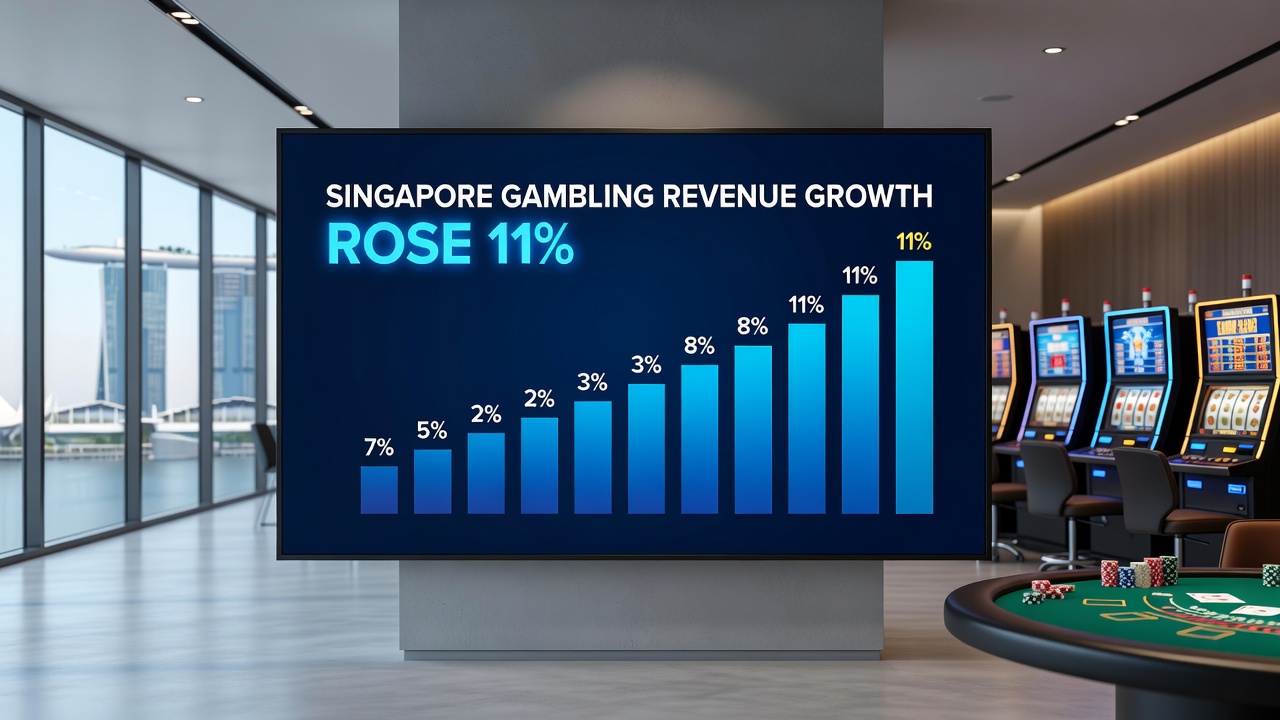
Those who examine multi-year patterns observe that FY2025/26 marked the second consecutive year of double-digit growth in the combined gambling category, extending a trend that began after pandemic-related restrictions eased in 2023.
Regulatory and Reporting Framework
Singapore’s tax authorities collect casino taxes under a tiered structure that applies different rates to gross gaming revenue depending on game type and location, while additional duties cover lotteries, betting, and remote gambling operations, all of which roll into the single reported total.
The FY2025/26 tax revenue statistics published in September 2026 provide the most recent verified numbers, and cross-references to IRAS annual comparison documents allow researchers to place the 11.9% gain within a longer historical sequence.
Because the Inland Revenue Authority aggregates these streams, any future refinement that separates casino tax from other gambling duties would require a change in reporting practice, something not indicated in the current release.
Conclusion
The data released for FY2025/26 establishes that combined gambling duties and casino tax revenue grew faster than overall tax collections, reaching SG$3.6 billion and confirming the sector’s contribution to national finances during a period of measured economic expansion. Further updates from IRAS will determine whether this pace continues into the next fiscal cycle.